Health
North Dakota childhood vaccination rates continue slide
By Emily Chang
Advertisement · Why this ad?
Carlos Martinez, a former sports anchor for Fargo's local NPR affiliate, has been reporting on professional sports for over eight years. He holds a journalism degree from the University of Minnesota and is known for his sharp insights into the local professional teams.
More from Carlos →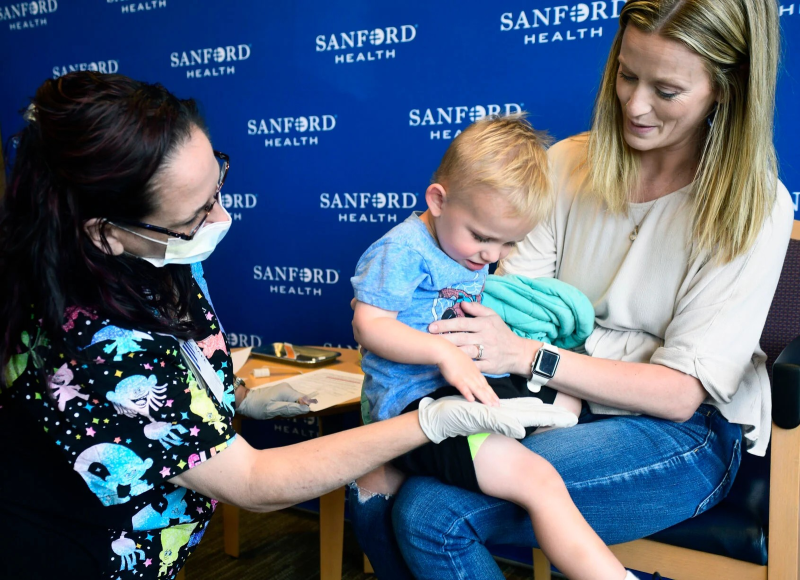
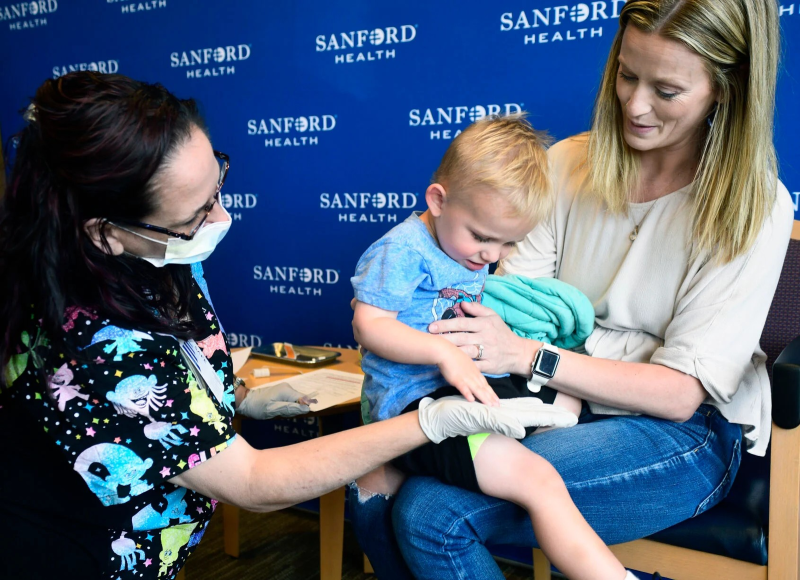
As the sun rises over Fargo, a mother gently cradles her infant, whispering sweet nothings while the baby gazes back, blissfully unaware of the world’s complexities. Yet, lurking in the shadows of this tender moment is a troubling reality: North Dakota's childhood vaccination rates are on a downward spiral, raising alarms among health officials. The latest figures reveal that the infant vaccination rate for measles, mumps, and rubella (MMR) has plummeted to a mere 76.1%, a stark decline from 94.8% in 2019. With over 4,500 measles cases reported nationwide — double the number from last year — the stakes couldn't be higher.
According to the North Dakota Department of Health, this decline is not merely a local phenomenon but part of a national trend that has seen increased skepticism about vaccines, particularly following the COVID-19 pandemic. Mary Woinarowicz, the state’s immunization director, expressed her concerns, stating, "It’s a trend we're seeing nationally with decreases in vaccination rates and increases in non-medical exemptions, particularly for school-age children, which is obviously a concern.”
For context, herd immunity requires about 95% of a population to be vaccinated to effectively contain highly contagious diseases like measles. With rates dropping below this threshold, the state is increasingly vulnerable to outbreaks. "What I think you're going to see is when a case of measles enters a highly vaccinated community, it's going to be very contained,” said Kylie Hall, director of North Dakota State University’s Department of Public Health Center for Immunization Research and Education. However, in communities with low vaccination rates, the potential for rapid spread becomes alarmingly high.
The disparity in vaccination rates across the state is striking. The eastern half generally boasts higher numbers, while the western half lags behind significantly. For instance, Richland County reports an 82% vaccination rate, while McKenzie County languishes at just 67%. This uneven distribution raises critical questions about public health strategies and community engagement.
In the wake of recent measles outbreaks, health officials have noted a surge in inquiries from parents. Angie Seidel, health services coordinator at Bismarck-Burleigh Public Health, shared her observations: "One thing we were happy to see is parents who were vaccine hesitant and did not have their children vaccinated against anything, come in and get that MMR vaccine just to have their kiddos protected.” This uptick suggests that fear of the disease itself, coupled with the reality of school exclusions for unvaccinated children, is motivating parents to reconsider their stance.
Vaccine hesitancy is a complex issue, often fueled by misinformation and a general distrust of government health recommendations. Poll data released by KFF indicates that while many supporters of the Make America Healthy Again (MAHA) movement express skepticism towards vaccines, a significant 76% still trust the MMR and polio vaccines. This dichotomy highlights the need for clear, consistent communication from health officials to bridge the gap between skepticism and acceptance.
Moreover, the increase in non-medical exemptions for vaccinations — now nearly 2% — further complicates this landscape. As Woinarowicz pointed out, "It is severe. It does spread easily. It does cause severe illness.” With several recent measles cases leading to hospitalization, the urgency for education and outreach cannot be overstated.
The decline in MMR vaccination is part of a broader trend affecting all recommended infant vaccinations in North Dakota. Hepatitis B vaccination rates, once a stronghold at 79.04%, are also faltering, while hepatitis A rates languish at a dismal 55.55%. As Woinarowicz noted, "Any time we see immunization rates decline, it is a concern because fewer people being vaccinated means there is a potential for an increase in cases.”
Respiratory vaccinations are also lagging behind. As the fall respiratory virus season approaches, flu vaccination rates stand at just 15.3%, a figure that mirrors pre-COVID levels but still raises eyebrows among health officials. Woinarowicz emphasized the importance of flu vaccines, stating, "Vaccines are one of the best ways to stay protected against respiratory illnesses.” With last year's pediatric deaths from influenza marking a decade-long first, the stakes are even higher for families.
The ripple effects of declining vaccination rates extend far beyond individual health. For families in Fargo and across North Dakota, the implications are profound. As the community grapples with these challenges, local health departments are stepping up their efforts to educate the public about the importance of vaccinations. Resources are available through organizations like the North Dakota Department of Health and local public health agencies.
Parents are encouraged to engage with healthcare providers to discuss vaccination schedules and the importance of protecting not only their children but the community at large. Seidel noted, "I feel like patients respect that provider input, and if your provider is directly talking to you about it and talking about the importance of the vaccine, people are more apt to receive it or even to consider it.”
In addition to healthcare providers, community organizations are also playing a critical role in addressing vaccination hesitancy. Local parent-teacher associations and grassroots groups are organizing informational sessions to dispel myths surrounding vaccines. These initiatives aim to create a supportive environment where parents can ask questions and share concerns without judgment. By fostering open dialogue, these community efforts seek to rebuild trust in vaccines.
Looking ahead, North Dakota’s health officials are committed to reversing the trend of declining vaccination rates. Educational campaigns are being designed to address misinformation and encourage community participation in vaccination programs. The hope is that by fostering open dialogue and providing accurate information, more parents will choose to vaccinate their children.
In addition, schools are becoming active participants in this effort. Many districts are implementing policies that require proof of vaccination for enrollment, which not only protects individual students but also contributes to the overall safety of the school environment. As schools take these measures, it reinforces the message that vaccinations are a shared responsibility.
As we move forward, it’s essential for the community to recognize that each vaccination not only protects individual children but also contributes to the collective health of the community. The journey to regain the confidence of hesitant parents will be a long one, but it’s a journey worth embarking on for the sake of our children.
In the end, the health of our community hinges on the choices we make today. As families in Fargo and beyond navigate the complexities of modern healthcare, the importance of staying informed and engaged cannot be overstated. Together, we can work towards a healthier future for all.
By Emily Chang
By Lydia Smallwood
By Lillian Becker
By Emily Chang